↳ Refrigerator Repair
Sub-Zero Vacuum Condenser Message: Clean, Reset, Then Watch It
A flashing Vacuum Condenser message on a Sub-Zero means the refrigerator is running inefficiently or too warm, most often because dust has matted the condenser. Vacuum the coil, switch the unit back on to reset it, then watch the temperatures for a day.
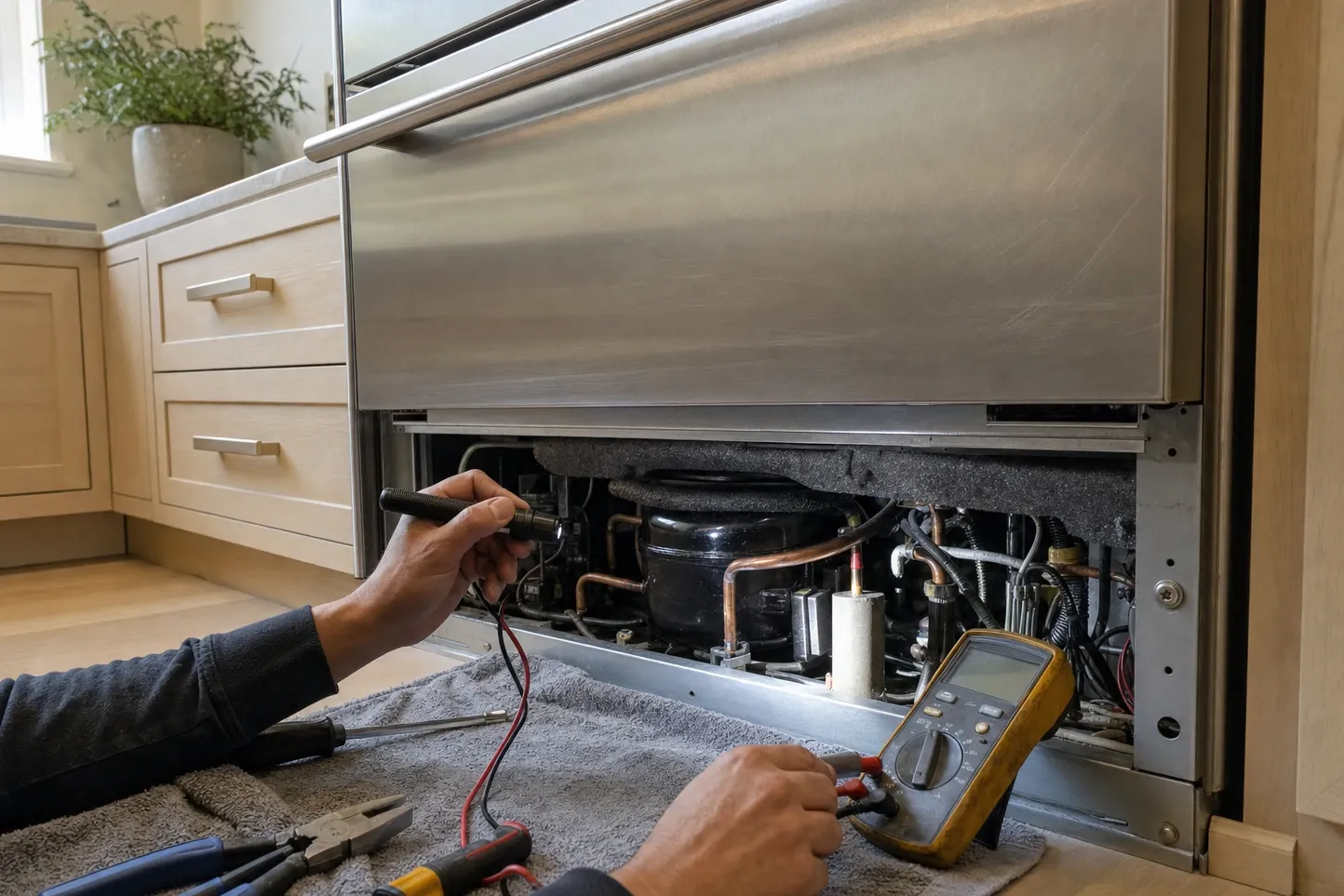
A flashing Vacuum Condenser message on a Sub-Zero refrigerator means the unit is working harder than it should, or that the inside temperatures have drifted too high. Sub-Zero names three causes: dust packed on the condenser coil, a door gasket that has stopped sealing, or a problem inside the refrigerator itself. The first step is yours, and the message spells it out: vacuum the condenser, then turn the unit back on, which resets the warning. If it returns, or the milk already feels warm, the cause is probably one of the other two.
Why the panel asks you to vacuum
The condenser is the coil that sheds the heat pulled out of the food compartments. A small fan draws room air across it and carries that heat away. Once dust and lint settle on the fins, air stops reaching the metal, the compressor runs longer to hold the same temperature, and the control notices the extra effort. Sub-Zero turned that observation into a plain-language reminder rather than a numbered code, because most of the time the fix is a cleaning job and not a breakdown.
On a full-size built-in, the condenser normally sits at the top of the cabinet, behind the louvered grille above the doors. Undercounter refrigerators, wine units and stand-alone ice makers breathe through the kick plate near the floor instead.
Cleaning the coil in about twenty minutes
- Switch the unit off with its power key, or at the breaker.
- Take off the grille. It lifts or swings away depending on the model, and the owner’s manual shows which.
- Brush down the fins with a soft condenser brush and follow behind with a vacuum hose. Work along the fins, not across them, so they do not fold flat.
- Keep fingers and tools away from the fan blade, and look closely at the intake face, where the thickest blanket of dust tends to build.
- Refit the grille and turn the unit back on. The message should be gone.
Do not worry about the food while the power is off. Sub-Zero’s own outage advice says an empty refrigerator typically needs 3 hours to warm past 45°F (7°C) in the refrigerator section and past 20°F (-6°C) in the freezer. A stocked one holds its cold longer, so a short cleaning with the doors kept shut puts nothing at risk.
Why Los Angeles condensers clog sooner
Two local conditions work against the coil. Santa Ana wind days drive fine, dry dust through every gap in a house, and the grille of a built-in sits right in its path. In the Valley, homes in Studio City and Sherman Oaks see summer afternoons far hotter than neighborhoods near the coast, so the refrigerator is pushing heat into warmer room air at the same moment its coil is losing airflow. Pet hair and remodeling dust add to the load. After any renovation, check the condenser before the warning appears rather than after.
Other messages that point at the same coil
The Vacuum Condenser reminder has relatives on other Sub-Zero panels, and almost all of them begin with the same cleaning job. What changes the advice is how warm the cabinet has become.
| What you see | What Sub-Zero says it means | What you can do first |
|---|---|---|
| Vacuum Condenser flashing | Running inefficiently or too warm | Clean the condenser, switch back on |
| EC50 with Service flashing | Refrigerator compressor running too long | Near-normal temperatures: clean the condenser, hold the bell key for 15 seconds. High temperatures: call |
| EC40 with Service flashing | Freezer compressor running too long | Less than 10° above set: clean the condenser. More than 10° above with the door closed: schedule service |
| Service flashing between zone temperatures | Excessive compressor run | Near-normal temperatures: clean the condenser, switch the home breaker off for 30 seconds |
The rule beneath the table is short: clearing a message is only sensible when the temperatures sit close to where you set them. Sub-Zero specifically warns against clearing EC40 while the temperature is still rising, since the reset only hides a fault that is getting worse.
When cleaning does not make it go away
If the warning reappears within a few days of a thorough cleaning, turn to the doors. Trap a strip of paper in each closed door and tug it, working your way around all four edges. If it slips out easily somewhere, the gasket has lost its grip along that stretch, and warm, humid kitchen air is creeping in day and night. Replacing a worn or torn gasket typically costs $300–$620.
Listen at the grille with the unit running, too. A condenser fan that has stopped turning makes a clean coil behave like a dirty one, and replacing that motor usually runs $340–$720; the condenser fan motor replacement cost page explains what the job involves. When the coil is clean, the fan spins and the doors seal, what remains is the compressor or the sealed refrigerant system, typically $1,400–$3,040. Each of those figures is a typical price; the firm quote follows the diagnosis.
If only the fresh-food side has gone warm while the freezer stays hard, our guide to a fresh-food side warm with the freezer still frozen walks through that particular pattern.
Booking a diagnosis
Sub-Zero Repair Experts Los Angeles works on built-in refrigerators, freezers, wine storage and ice makers in Silver Lake, Los Feliz, Studio City and Sherman Oaks. A visit begins with an $89 service call that pays for the trip and the full fault-finding, and that amount comes off the repair as soon as you approve the price. Call (310) 496-3358 or use the booking button on this page. Tell us the exact message, the temperatures on the display and whether the condenser has already been cleaned. More about the work itself is on our refrigerator repair page.
Where this goes next
If the coil is clean and the warning still comes back, a stalled fan is the next suspect, and the page oncondenser fan motor replacement cost explains what that job involves.
When the fresh-food side has warmed while the freezer stays hard, read the guide tofresh food warm with the freezer still frozen before booking anything.
Every visit for this message starts witha full refrigerator diagnosis, and the $89 call-out is credited to whatever repair you approve.
Follow-ups
What does Vacuum Condenser mean on a Sub-Zero refrigerator?
It means the refrigerator is either running inefficiently or holding temperatures that are too high. Sub-Zero points to a dusty condenser first, then a door that is not sealing, then a fault inside the unit. The wording is the instruction: vacuum the condenser coil, then turn the unit back on to clear the message.
Can I keep using the refrigerator while the message is flashing?
Yes, as long as the food is still properly cold. Put a thermometer in the fresh-food section; if it reads close to your set point, clean the condenser right away. If the reading keeps climbing, move perishables to a cooler and call (310) 496-3358, because the reminder alone does nothing to stop a warming cabinet.
Why does my Sub-Zero say Vacuum Condenser and the fridge is not cooling?
A warm refrigerator showing this message is usually struggling to get rid of heat. A matted condenser is the most common reason, but a torn door gasket, a stalled condenser fan or a sealed-system fault set off the same warning. Clean the coil first; if the fresh-food side stays warm afterward, book a diagnosis.
What does the $89 service call cover?
It covers the trip to your home and the complete fault-finding behind the message. Once you approve the repair price, the $89 is taken off that bill, so the visit is not charged twice. You hear the cause and the figure before any work starts, and you decide whether to go ahead.