↳ Freezer Repair
Poolside and Garage Freezers Through a Valley Summer
A freezer in a garage or at a poolside bar spends the summer rejecting heat into a room hotter than the kitchen. What that costs it, and what keeps it working — Sub-Zero Repair Experts Los Angeles, (310) 496-3358.
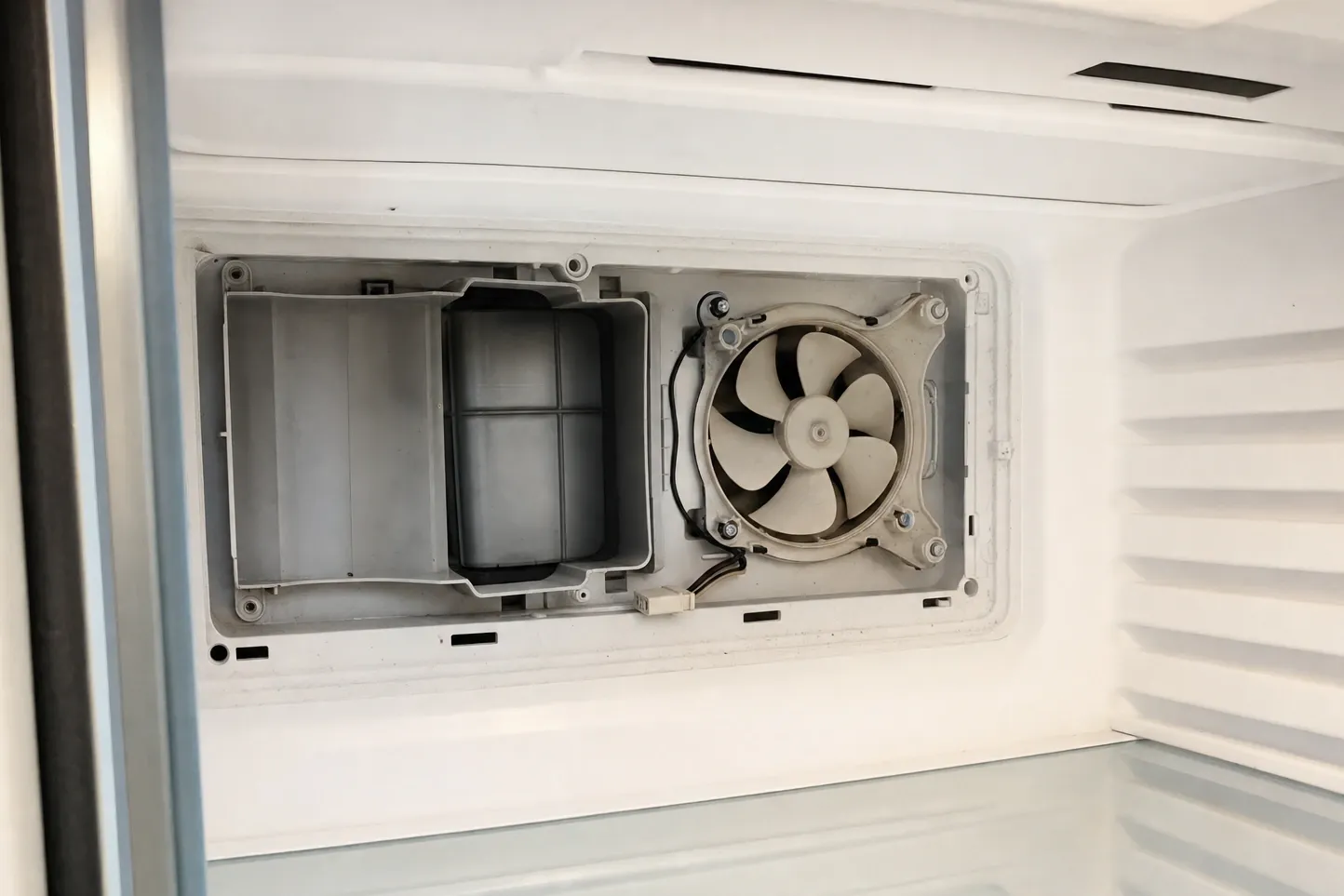
A freezer does not destroy heat. It moves it: out of the frozen compartment, into the refrigerant, and off the condenser coil into whatever air happens to be around the cabinet. In a Valley Village garage in late July, or under a poolside counter in Studio City at four in the afternoon, that air is a long way from the kitchen air the cabinet was designed to dump into. Nothing is broken. The machine simply has less room to work in, and every weakness it already had shows up at once.
That is why the second cabinet in the house — the overflow freezer by the water heater, the drawer unit at the bar, the all-freezer column moved out to the garage in Sherman Oaks when the kitchen was redone — generates a disproportionate share of August calls, while the built-in ten steps away carries on untroubled.
What heat actually does to the machine
Three things change when the room around a cabinet gets hot, and they compound.
The first is run time. The hotter the surrounding air, the less heat each pass over the condenser sheds, so the compressor stays on longer to get the same work done. A cabinet that cycled comfortably in May runs most of the afternoon in August. Longer run time means more hours of wear on the compressor and the fans, and it means the defrost cycle has a bigger frost load to deal with each time it comes round.
The second is margin. A freezer holding its set point is not sitting at its limit; it has capacity in hand for a door left open, a warm load put in, or an afternoon hotter than yesterday. Ambient heat spends that reserve. The cabinet still holds — until the day something small happens on top of it, and then it does not.
The third is that heat makes every other fault visible. A condenser half-blocked with dust is invisible in winter and decisive in summer. A condenser fan turning slowly is survivable in a cool room and not in a hot one. A door seal with a soft corner leaks warm, humid air all year, but in a garage in July that air is both hotter and wetter, so it arrives as frost instead of as a slightly higher bill.
None of that is a design failure. It is the arithmetic of where the cabinet was put.
The four things worth checking before August
These are owner jobs, all of them done from outside the machine.
Clearance. Find out what is behind and above the cabinet, and get it back. A unit pushed hard against a garage wall, or boxed in by shelving somebody built around it, is re-breathing its own exhaust: the air it dumps heat into is the air it draws in again a second later. This is the single cheapest thing on the list and the one most often quietly undone by storage.
The grille. The louvred panel at the base is the intake and the exit for the whole machine compartment. Bags, buckets and pool equipment stacked in front of it do real damage over a season. Nothing should be leaning on it.
The coil. Take the machine-compartment grille off and look. Fins the colour of felt, matted with dust, hair and lint, are the commonest cause of a warm second freezer anywhere in the south valley. Brushing that off and vacuuming what falls is well within what an owner can do, and on a good number of calls it is the entire repair. Do it before the heat arrives, not after the compartment has already given up a load of food.
The load and the lid. A garage freezer opened twice a day and packed to the liner behaves differently from a kitchen one. Leave the return-air path at the back clear, and do not leave a drawer resting almost-shut on a bag of peas — in a hot, humid room that gap turns into ice on the seal within days.
That is the whole owner list. Anything past it — a panel off, a fan metered, a reading taken at the sealed system — is a service call, and deliberately so.
When it stops being heat and starts being a fault
The useful test is whether the cabinet recovers when the room does. A freezer that drifts by a few degrees through a hot afternoon and is back on its number by morning is loaded, not faulty; clearance and a coil clean will usually give it the afternoon back. A freezer that never returns to its set point overnight, or one that has stopped resting at all, has crossed over into something that needs metering.
What gets read on that visit, in order: the coil and the clearance first, because they are the likeliest and the cheapest to prove; then the condenser fan, which fails gradually and is easy to mistake for a refrigerant problem; then the evaporator fan and the defrost circuit inside the compartment; then, and only then, gauges. A warm garage freezer is called a sealed-system job far more often than it turns out to be one.
Two seasonal patterns are worth naming because they mislead people. Frost that appears in a garage cabinet every summer and clears every winter is humidity plus a tired seal, not a defrost failure. And a compartment that was fine for six years and warmed the week the neighbour’s addition went up is usually a ventilation story: something changed about where that heat had been going.
Where this goes next
The summer complaint this produces, over and over, isa freezer stuck in the teens, cold enough to look healthy and never cold enough to be.
Where the fan behind the grille has given up rather than the coil being dirty, the work is priced asa condenser fan motor replacement.
The same pattern turns up in kitchens opened to the back yard, which is why it fills so much ofthe Studio City page.
Follow-ups
Will a freezer in the garage survive a valley summer?
Most do, and they run far harder doing it. Heat in the room is load on the condenser, so the compressor spends more of the day running and the compartment keeps less margin in reserve. Clearance and a clean coil are what decide whether that margin runs out in August.
Should I turn a garage freezer colder for the summer?
It rarely helps and often hurts. A cabinet already running flat out cannot reach a lower set point, and the extra demand only lengthens the run time and thickens the frost. Deal with the heat and the coil instead, then put the setting back where it belongs.
Who do I call about a poolside freezer in Sherman Oaks?
Sub-Zero Repair Experts Los Angeles works the east side and the south valley, and a bar or garage cabinet is booked the same way as a kitchen one: (310) 496-3358. The visit is $89, credited against whatever the repair turns out to be once the readings are in.